
Road Rage Statistics
Whether it’s tailgating, abrasive honking, getting cut off in traffic, or worse, road rage is all too familiar for drivers in the United States. This article reviews the latest road rage statistics, including the number of accidents associated with it and the most common types of such misconduct.
- Road Rage Statistics: The State of Driver Aggression in 2026
- Road Rage and the Rising Rates of Aggressive Driving
- Analyzing the Link Between Aggressive Driving, High-Risk Accidents, and Crash Probabilities
- Road Rage Shootings: Statistics on Gun Violence and Injuries
- Who Is Prone to Road Rage? Analyzing Trends
- When and Where Road Rage Happens
- Understanding the Impact on Road Safety and How To Protect Yourself
- Additional Resources
Road Rage Statistics: The State of Driver Aggression in 2026
Not every instance of road rage gets reported in national data. However, research can paint a detailed image of how prevalent and dangerous these driving behaviors have become.
96%
of drivers admit to engaging in aggressive driving behaviors over the past year.
Key Road Rage Statistics
Ninety-six percent of drivers admitted to engaging in aggressive driving behaviors in 2025.
Since 2013, road rage has reportedly been responsible for approximately 300 deaths.
One study found that young males most commonly engage in road rage.
Nearly 50% of Americans report that people in their area drive more dangerously than before the coronavirus pandemic.
According to the National Highway Traffic Safety Administration, or NHTSA, 66% of traffic fatalities result from aggressive driving.
The American Psychological Association found that 50% of drivers respond to the careless acts of other drivers with aggressive behavior themselves.
What Is Road Rage?
Road rage is an umbrella term for driving behaviors that people engage in as a response to frustration or anger. Most commonly, drivers exhibit road rage through aggressive honking, speeding, shouting, or cutting others off in traffic. Each of these behaviors can be extremely dangerous and lead to severe, even fatal, collisions.
Road Rage and the Rising Rates of Aggressive Driving
Road rage is an unfortunate and common experience. According to national statistics, the majority of Americans have either experienced someone else’s act of road rage or been the perpetrator themselves.
How Common Is Road Rage?
A 2024 study found that 96% of individuals had witnessed an act of road rage in the past six months. Similarly, 82% of American drivers in 2019 admitted to having some form of road rage at least once in the past year.
Provide statistics on who has witnessed road rage, been victims of aggressive driving, or drivers who admit to road rage or unsafe driving.
Common Aggressive Driving Behaviors
Road rage can take many forms, including tailgating another vehicle, yelling at drivers or pedestrians, making angry gestures, or honking aggressively. A nationwide survey of over 3,000 drivers documented the following aggressive driving behaviors in 2025:
- Speeding up when a traffic light changed from yellow to red – 82%
- Honking out of anger – 66%
- Glaring – 65%
- Cutting off another driver – 20%
- Tailgating – 39%
- Yelling – 39%
- Angry gestures – 37%

Analyzing the Link Between Aggressive Driving, High-Risk Accidents, and Crash Probabilities
A sudden burst of road rage may seem harmless to the driver at the time, but the aggressive actions that can follow are often precursors to injury and death on the road.

Aggressive Driving Contributes To Serious Crashes
Since 2019, 12,610 injuries and 218 murders have been attributed to road rage. Two of the most common forms of road rage are speeding and tailgating. In 2023, speeding was a contributor in 29% of all traffic fatalities. Similarly, tailgating is a common factor in rear-end collisions, which make up nearly 23% of all auto wrecks. The NHTSA reports that approximately 2,000 deaths and 950,000 injuries result from rear-end collisions.
Road Rage Shootings: Statistics on Gun Violence and Injuries
Gun violence and road rage can go hand-in-hand, significantly increasing the risk of a serious crash and fatal injuries.
How Often Does Road Rage Involve Firearms? Trends and Dangers
According to data, the number of road rage incidents involving firearms has risen significantly over the last decade. However, these figures only reflect tracked cases; the total number of gun violence associated with aggressive driving is likely much higher.
Over the past decade, gun-involved road rage incidents have more than doubled in number. In 2023 alone, someone was shot in a road rage situation approximately every 18 hours, significantly more frequently than in earlier years. Some data even indicates that up to 37% of aggressive driving incidents involve a firearm.
Who Is Prone to Road Rage? Analyzing Trends
The latest data concerning road rage in the United States sheds light on the most at-risk groups based on age and gender.

The Most Aggressive Age Groups
According to recent studies, millennials—those born between 1981 and 1996—are more likely to exhibit road rage behaviors. This group has reportedly taken part in more than 51% of all aggressive driving accidents. Following this, Gen X accounted for 21% of road rage incidents, while Baby Boomers made up only 4.2%.
Gender Trends in Road Aggression
Males are more likely than females to both exhibit and be subjected to road rage. One study showed that 39.2% of men have experienced road rage directed at them in comparison to 28.9% for women.
When and Where Road Rage Happens
While road rage can happen anywhere at any time, data shows there are higher-risk areas and times of day for this kind of behavior.

Peak Times and Conditions
- Rush hour, especially during morning and evening commutes
- Heavy congestion or stop-and-go traffic
- Inclement weather, such as rain, snow, or fog
- Construction zones or lane closures
- Holiday travel periods
- After-work hours, when drivers may be fatigued or stressed
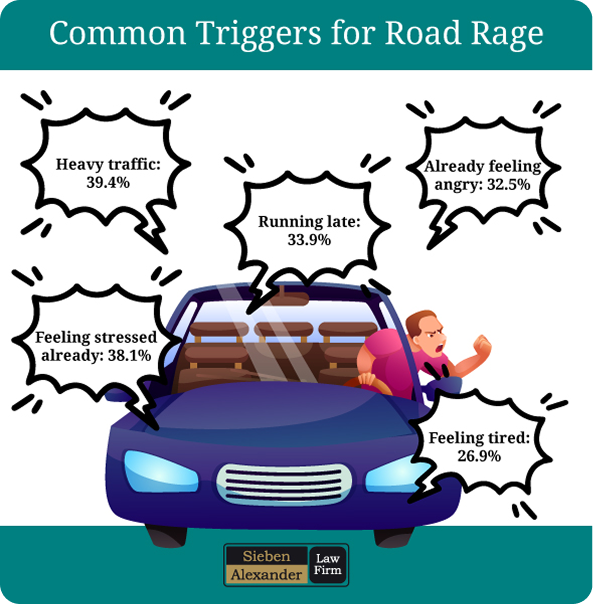
Common Triggers for Road Rage
Drivers who experience road rage often cite running late, stress, and fatigue as common contributors. One survey found the following factors to be consistent in road rage among drivers:
- Heavy traffic: 39.4%
- Feeling stressed already: 38.1%
- Running late: 33.9%
- Already feeling angry: 32.5%
- Feeling tired: 26.9%
The study showed that each of these stressors correlates strongly with emotional or time-pressure triggers.
Geographic Hotspots: Road Rage by State
Louisiana consistently ranks among the worst states for aggressive driving-related crashes, with a large percentage of fatal crashes linked to aggressive or careless driving. Meanwhile, New Mexico has one of the highest per-capita rates of road rage incidents involving guns and a high proportion of traffic fatalities tied to aggressive driving. Nevada, Colorado, Arkansas, and Montana also frequently appear among the states with the highest rates of aggressive driving.
Understanding the Impact on Road Safety and How To Protect Yourself
Road rage is an unfortunate reality for drivers. Whether you have been cut off on the freeway or tailgated in heavy traffic, it is easy to see how quickly these situations can escalate into an accident. Drivers can help keep roads safe by recognizing and addressing mental stressors before getting behind the wheel.
However, we cannot control other drivers’ actions, and road rage-related collisions may still occur. If you or your loved one has been hurt in a crash, do not wait to get the help you deserve.

Additional Resources
- Sieben Alexander’s Road Rage Guide: This detailed resource explains what road rage is, how it differs from aggressive driving, and why stress and emotional triggers matter.
- Report Unsafe Driving — Minnesota DPS State Patrol: This official Minnesota Department of Public Safety page lets you report unsafe or dangerous driving observed on interstate highways or state trunk highways. It explains when to use this form versus calling 911 for immediate threats and directs you to contact local law enforcement for unsafe driving on non-highway roads.
- Safety Talk – Defensive Driving – Avoid Road Rage: This provides proactive driving habits to reduce conflict and aggressive interactions.