Talc & Asbestos: Increased Risks for Women
For many women, everyday products like baby powder and cosmetics seemed harmless. Now, research shows that some talc products containing asbestos have been linked to mesothelioma, ovarian cancer, and other serious illnesses. At Sieben Alexander P.A., we understand the fear and uncertainty these risks bring. Call 651-437-3148 or contact us online today to learn how we can help protect your rights.
- Understanding the Connection Between Asbestos and Talcum Products in Women’s Health
- How Talc-Based Products Contribute to Asbestos Exposure in Women
- The Hidden Dangers of Talc and Asbestos Exposure in Women
- Protecting Yourself from Asbestos and Talc: Prevention Tips for Women
- What Are My Legal Rights and Compensation Options if I Was Exposed to Asbestos in Talc?
- Why Do I Need an Attorney For My Asbestos Lawsuit?
- Contact Our Talc Asbestos Lawyers Today at Sieben Alexander P.A.
- Talc and asbestos are natural minerals often found together, which can contaminate consumer products.
- Women may face heightened risks due to frequent use of talc-based items such as cosmetics and baby powder.
- Exposure to asbestos-contaminated talc has been linked to ovarian cancer, mesothelioma, and serious respiratory diseases.
- Safer alternatives include cornstarch-based powders and verified talc-free cosmetics.
- Sieben Alexander P.A. offers decades of asbestos litigation experience, free consultations, and representation across the Upper Midwest.
Understanding the Connection Between Asbestos and Talcum Products in Women’s Health
What is Asbestos?
Asbestos is a group of naturally occurring minerals that was once widely used for insulation and fire resistance. When asbestos fibers are inhaled or ingested, they can cause life-threatening diseases such as mesothelioma, lung cancer, and asbestosis. There is no known safe level of asbestos exposure.
How Does Talc Become Contaminated with Asbestos?
Talc and asbestos are mined minerals that often occur close together underground. The FDA has published test methods to evaluate the safety of talc-containing products, since deposits may become contaminated with asbestos during extraction.

Why Are Women at a Higher Risk for Asbestos and Talc Exposure?
Women are often more likely to use personal care products that contain talc, including powders and cosmetics. Research indexed by the National Library of Medicine reports associations between long-term cosmetic talc use and asbestos-related disease.
How Talc-Based Products Contribute to Asbestos Exposure in Women
Household items often contribute to asbestos exposure, and talc-based products are no exception. Talc is found in baby powders, body powders, deodorants, and cosmetics. When contaminated with asbestos, these household products can create serious health risks for women who use them regularly.
What Beauty Products and Cosmetics are Known to Contain Talcum Powder?
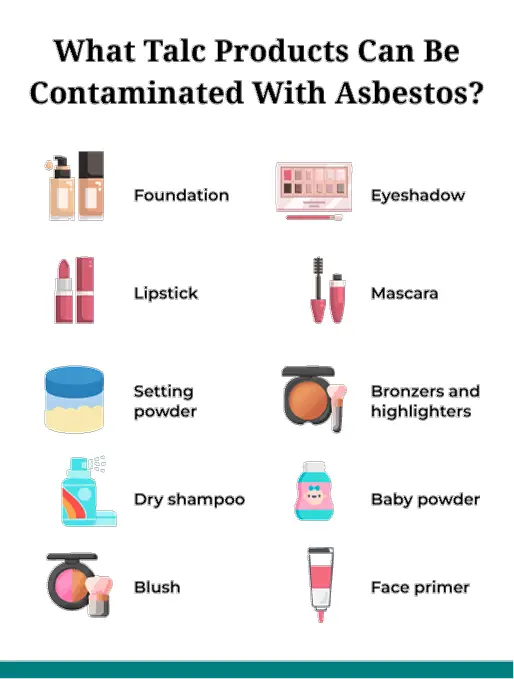
Investigations into talc products containing asbestos have shown that contamination can reach everyday cosmetics. Because many of these products are applied directly to the face or skin, women who use them regularly may face heightened exposure risks. Talc may be found in:
- Foundation
- Eyeshadow
- Lipstick
- Mascara
- Setting powder
- Bronzers and highlighters
- Dry shampoo
- Baby powder
- Blush
- Face primer
Johnson & Johnson Baby Powder Lawsuits: Cancer & Asbestos Risks in 2026
For decades, talc-based baby powder was a household staple, but litigation and medical evidence have shown that long-term use can contribute to cancer development. Women who applied talc-based products to themselves or their children for years may face an increased risk of ovarian cancer.
These concerns have been amplified by lawsuits and national news, including CNBC reporting on high-profile cases. In December 2025, a Minnesota jury awarded a record-breaking $65.5 million verdict against Johnson & Johnson, finding its talc products caused a young mother’s peritoneal mesothelioma, with Sieben Alexander, P.A. assisting during trial.
In response, many companies have moved away from talc, with Johnson & Johnson announcing a transition to cornstarch-based powders as a safer alternative.
If you relied on talc-based baby powder for years, it is important to monitor your health. A health care professional should evaluate symptoms such as abdominal pain, bloating, or changes in the menstrual cycle.
For women and families facing an asbestos-related diagnosis, the Minnesota Mesothelioma Lawyers at Sieben Alexander P.A. are here to listen, guide, and help you pursue justice.
The Hidden Dangers of Talc and Asbestos Exposure in Women
When asbestos fibers are inhaled or ingested through contaminated products, they can lodge in the lungs or internal organs. Over time, this raises the risk of ovarian cancer, respiratory disease, and other severe health conditions.
How Talc and Asbestos Exposure Leads to Health Complications in Women
The risk of asbestos exposure increases based on how talc products are applied. For many women, these products are part of a daily routine. Using multiple items that may contain talc, from makeup to personal powders, can increase exposure, since fibers may be inhaled during use or absorbed through the skin.
Exposure in sensitive areas such as the genital region has been linked to ovarian cancer. Talc particles may travel to the ovaries and cause inflammation, which can contribute to cancer development over time. Understanding these risks is difficult, especially when the products were once trusted, but awareness is an important step toward protecting your health.
What Are Some Common Health Conditions Linked to Talcum Powder and Asbestos in Women
Women exposed to asbestos through talc products face an increased risk of developing serious health conditions, including:
Ovarian Cancer: Long-term talc exposure in the genital area has been linked to ovarian cancer, with studies showing talc particles can migrate to the ovaries and cause inflammation that may lead to cancer. This risk has been a core issue in many talcum powder lawsuits.


Mesothelioma: There is no known safe level of asbestos exposure; even low-level exposure has been associated with mesothelioma, a rare but aggressive cancer affecting the lining of the lungs, heart, or abdomen.
Respiratory Diseases: Inhaled asbestos fibers can damage lung tissue and lead to chronic respiratory illnesses, including asbestosis and lung cancer.
Protecting Yourself from Asbestos and Talc: Prevention Tips for Women
Avoiding talc-based products is the most effective way to protect your health. Awareness of where talc may appear and how exposure happens empowers women to take control of their daily choices.
How Can Women Avoid Exposure to Talc in Everyday Products?
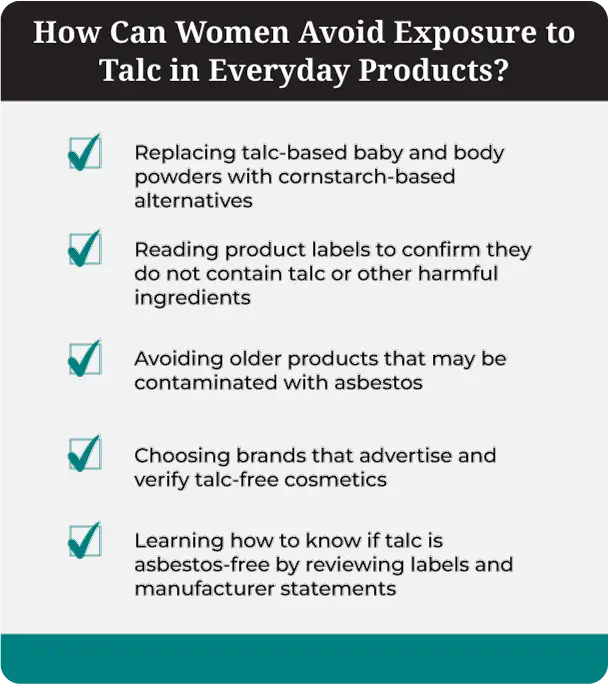
Because powders, cosmetics, and personal care products are used so often, making changes can feel daunting. Still, awareness and small shifts in daily routines can reduce risk and help women feel more confident about the products they use. These changes can make everyday routines healthier and more reassuring:
- Replacing talc-based baby and body powders with cornstarch-based alternatives
- Reading product labels to confirm they do not contain talc or other harmful ingredients
- Avoiding older products that may be contaminated with asbestos
- Choosing brands that advertise and verify talc-free cosmetics
- Learning how to know if talc is asbestos-free by reviewing labels and manufacturer statements

What are Some Safe Alternatives to Talc-Based Products for Women’s Health?
Instead of relying on talc-based items, there are now safer alternatives such as cornstarch, arrowroot powder, or organic body powders. These options are just as effective at absorbing moisture and reducing friction without the risk of asbestos contamination.
When it comes to cosmetics, look for certified talc-free products free from other potential irritants. Many health-conscious beauty brands now offer these safer formulations, giving women options that minimize exposure while meeting their everyday needs.
What Are My Legal Rights and Compensation Options if I Was Exposed to Asbestos in Talc?
If you or a loved one has been diagnosed with an asbestos-related disease after using talc products, you may be entitled to pursue legal compensation. Many women and families file a talcum powder lawsuit to seek justice. The talc asbestos exposure attorneys at Sieben Alexander P.A. can guide you through your options and help you pursue the recovery you deserve.
Steps to Take if I’ve Been Exposed to Asbestos in Talcum Products
The first step is to monitor your health and seek medical care if you notice concerning symptoms. A doctor can help you understand whether further evaluation is needed and guide you toward appropriate treatment.
It is also important to document your history of asbestos exposure and share it with your healthcare provider. This record not only supports your medical care but can also be valuable if you decide to explore legal options. Alongside medical attention, you may have the right to pursue compensation for illnesses caused by talc or asbestos exposure.
Can I Get Compensation for Talc-Related Asbestos Exposure?
There are several ways women and families may recover compensation for asbestos-related illnesses tied to talc products:
- Lawsuits: Filing a lawsuit against negligent manufacturers may result in financial recovery for medical bills, lost wages, and pain and suffering.
- Settlements: Many companies choose to settle cases outside of court, which can provide faster compensation.
- Trust Funds: Some asbestos manufacturers established trust funds to compensate people harmed by asbestos exposure.
Why Do I Need an Attorney For My Asbestos Lawsuit?
Handling an asbestos lawsuit requires a deep understanding of medical evidence and complex legal procedures. An attorney can organize exposure records, build a strong case, and fight for the maximum compensation available.
Choosing the best mesothelioma lawyer for your situation can make all the difference in how your case is handled and resolved. Working with an experienced asbestos lawyer protects your rights while you focus on your health and recovery.
Why Sieben Alexander P.A. Is Trusted by Asbestos Victims
Sieben Alexander P.A. has over 50 years of experience representing individuals and families in asbestos cases and is the only firm in Minnesota that handles asbestos injury cases. The firm has recovered over $900 million in asbestos case verdicts and settlements while providing clients with the resources of a large practice and the personal attention of a local team. Past clients have shared that the firm’s dedication and compassion made a meaningful difference during some of the most difficult times in their lives.
Contact Our Talc Asbestos Lawyers Today at Sieben Alexander P.A.
Sieben Alexander P.A. is the only Minnesota law firm actively handling mesothelioma and asbestos-related claims. Our attorneys have tried more asbestos cases in Minnesota than all other firms combined, securing results in both asbestos-related illness claims and Mesothelioma Wrongful Death Lawsuits.
If you or a loved one has been diagnosed with an asbestos-related disease, our Minnesota Asbestos Exposure Lawyers are here to help. Call 651-437-3148 or use our online form for a free consultation with an experienced attorney today.