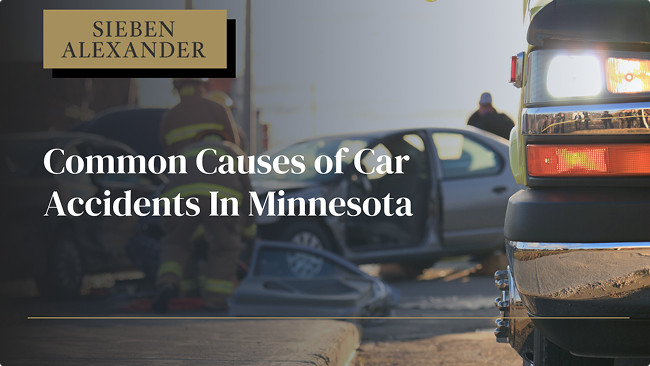
Minnesota Car Accident Causes in 2026: Key Factors Behind Crashes & Fatalities
Car accidents can happen in an instant, leaving serious injuries and complex insurance or legal issues. At Sieben Alexander, P.A., our team has spent over 50 years helping clients navigate these challenges and pursue the compensation they deserve. Below is an overview of common risks Minnesota drivers face and tips to help avoid a car accident.
Written by:
John P. Sieben, Partner, Sieben Polk P.A.
Home » Minnesota Car Accident Causes in 2026: Key Factors Behind Crashes & Fatalities
- Distracted driving, speeding, reckless maneuvers, and impaired operation are leading causes of accidents in Minnesota.
- Social media streaming and vlogging while driving are emerging distractions.
- Lane splitting, now legal for motorcyclists in Minnesota, can increase the risk of side-swipe and blind-spot collisions.
- Working with an experienced Minnesota car accident lawyer can reduce stress and ensure you focus on recovery, not paperwork.

What Are the Main Causes of Car Accidents in Minnesota in 2026?
Distracted driving, speeding, reckless driving, impaired operation, and dangerous road conditions are among the leading causes of car accidents in Minnesota. In 2025, preliminary reports show the state saw 351 fatal crashes, claiming more than 370 lives. Although this represents a decline from 2024, these numbers show that Minnesota roads remain risky.
Practical Ways To Prevent Distracted Driving
Staying attentive on the road starts with making smart, practical choices before and during every drive. Start with these habits:
- Keep your phone out of reach or use hands-free features.
- Set navigation, music, and other controls before driving.
- Avoid distractions like eating, drinking, or adjusting settings while moving.
- Turn on “Do Not Disturb” or silence notifications.
- Pull over and stop in a safe location if something needs your attention.
- Stay attentive, especially in heavy traffic or unfamiliar areas.
Distracted Driving Fuels Minnesota Car Accidents in 2026
Distracted driving occurs when drivers divert their attention from the road to other tasks, such as using a phone, operating a navigation system, or even talking to passengers. In Minnesota, distracted driving contributes to a significant portion of collisions, particularly in urban areas like Minneapolis and St. Paul.
Modern distractions go beyond texting or phone calls. Infotainment overload occurs when drivers interact with large touchscreen dashboards that control navigation, music, phone calls, and other vehicle settings simultaneously, diverting attention from driving. Other risks include voice-to-text delays, which briefly divert drivers’ focus from the road, and social media streaming, a growing trend among drivers who attempt to record or broadcast while behind the wheel.
How Speeding and Reckless Driving Lead to Minnesota Car Crashes
Speeding and aggressive driving do more than simply break traffic laws. They greatly increase the chances of a crash and make accidents more dangerous when they happen. Driving too fast reduces the time you have to react to sudden changes in traffic, makes it harder to control your vehicle, and increases the force of impact in a collision. Crashes at higher speeds are more likely to cause serious injuries for everyone involved.
Reckless actions such as following too closely, changing lanes unsafely, and running red lights are major contributors to severe crashes across Minnesota. High-traffic routes like I-35, I-94, and U.S. Highway 169 are particularly affected.

How To Prevent Speeding and Reckless Driving in Minnesota
Preventing speeding and reckless driving starts with conscious choices every time you get behind the wheel, such as:
- Observing posted speed limits and adjusting your speed for weather, traffic, or road conditions
- Keeping a safe distance from the car in front to prevent collisions
- Avoiding aggressive behaviors like tailgating, weaving between lanes, or honking excessively
- Using cruise control on highways to help keep a steady, safe speed

How Alcohol and Drugs Contribute to Minnesota Car Accidents
Alcohol and drugs impair a driver’s ability to operate a vehicle safely. These substances impair coordination, reaction time, and decision-making, making it difficult to judge speed, distance, and traffic conditions. Even a small amount can reduce a driver’s ability to safely control a vehicle. Drunk and impaired drivers are more likely to cause serious collisions, putting themselves, passengers, and others at risk of injury or death.
How To Avoid Driving Under the Influence in Minnesota
Driving under the influence is a serious risk on Minnesota roads. Keep yourself and others safe by following these steps:
- Never operate a vehicle while taking prescription medications that impair alertness or reaction time.
- Plan for a designated driver or rideshare if you will be consuming alcohol or attending events where alcohol may be present.
- Monitor your own level of impairment and wait until you are legally sober before driving.
- Avoid mixing alcohol with medications or other substances that could increase impairment.
Essential Winter Driving Safety Tips for Minnesota Drivers
Minnesota’s winter conditions demand careful driving and proper vehicle maintenance. These tips can help you stay safe and avoid accidents in harsh weather:
- Slow down and leave extra space between your vehicle and others when roads are icy.
- Maintain your vehicle by regularly inspecting tires, brakes, and fluid levels.
- Avoid unnecessary travel during severe weather events.
- Clear snow and ice from all windows, mirrors, and lights before driving.
Weather-Related and Winter Driving Accidents in Minnesota
Winter weather in Minnesota creates serious challenges for drivers each year. Snow, ice, and slick roads are common from November through March, leading to more accidents during this period. Reduced traction, limited visibility, and sudden weather changes make driving more dangerous, and even experienced drivers can struggle to maintain control on icy roads or during fast-moving snowstorms.
Taking extra precautions during the winter months can help reduce the risk of accidents and keep you safer on the road. For practical tips and guidance, see our winter driving safety guide.
The Risks of Teen and Inexperienced Drivers in Minnesota
Teen and inexperienced drivers face a higher risk of accidents, often because they have limited time behind the wheel. Driving requires quick decision-making and the ability to respond to changing conditions, both of which develop with experience.
Common challenges include misjudging distances between vehicles, overcorrecting to avoid hazards, and failing to yield the right of way. These mistakes are a normal part of the learning process, but they can still lead to serious consequences. With consistent support, driver education, and regular practice, young drivers can build safer habits and gain confidence over time.
Practical Tips for Safer Teen Driving
Helping teen drivers stay safe on the road starts with building strong habits early and reinforcing them over time. Consider taking these steps:
- Enroll your teen in a comprehensive driver education program to build foundational skills and confidence.
- Encourage safe driving habits through consistent guidance, feedback, and open communication.
- Set limits on night driving and the number of passengers to reduce distractions and risk.
- Establish clear rules and expectations for driving behavior, including speed and phone use.
- Provide opportunities for supervised practice in a variety of driving conditions.

Vehicle Malfunctions: How Maintenance Issues Cause Minnesota Car Accidents
Maintenance issues can lead to unexpected vehicle failures, increasing the risk of accidents. Problems with brakes, tires, steering, or other critical systems can make it harder to respond to hazards and maintain control. Keeping up with routine maintenance helps reduce these risks.
Essential Vehicle Maintenance Tips for Minnesota Drivers
Well-maintained cars handle emergencies better and are less likely to fail at critical moments. Simple checks for defective parts and timely repairs can make a big difference in road safety. Take the following steps to ensure your vehicle is safe:
- Perform routine inspections on brakes, tires, lights, and steering to catch issues early.
- Address recalls promptly to ensure your vehicle meets safety standards.
- Replace worn-out parts before they pose a hazard, including belts, wipers, and suspension components.
- Inspect tires for tread depth, proper inflation, and signs of wear or damage.
- Test lights, signals, and the horn regularly to ensure visibility and communication with other drivers.
- Keep the battery in good condition and replace it when necessary to avoid sudden breakdowns.

Other Common Causes of Minnesota Car Accidents in 2026
Tired drivers, aggressive behavior, over-reliance on technology, lane-splitting, and ignored traffic signals remain significant contributors to car accidents in Minnesota in 2026. These risks affect drivers of all experience levels and can turn even routine trips into dangerous situations.
Fatigued Driving
When drivers are fatigued, their ability to make quick decisions and react to traffic conditions is impaired. Tiredness can lead to missed signals, delayed braking, or drifting out of lanes. Fatigue-related accidents are preventable with proper rest and awareness of warning signs.
Road Rage
Road rage occurs when drivers respond to anger or frustration behind the wheel with unsafe or aggressive actions. Such behavior includes speeding, cutting off other vehicles, or making threatening gestures, all of which increase the likelihood of accidents.
For more information, see our guides covering road rage statistics and tips for recognizing and managing emotions to stay safe behind the wheel.
Tech Complacency and How ‘Autopilot’ Features Can Cause Accidents
Drivers experience tech complacency when they trust automated systems, such as autopilot or lane-keeping, to handle driving, leading them to drift. Overreliance on technology can lead to missed hazards, slower reactions, or a loss of control in emergencies. Staying alert and ready to take control is essential, even when using advanced driver-assist technology.
The Impact of Legalized Lane Splitting
Lane splitting for motorcyclists became legal in Minnesota on July 1, 2025, allowing riders to move between lanes of slow‑moving or stopped traffic. This practice can increase the likelihood of side-swipe and blind-spot collisions, especially since many drivers are not accustomed to sharing lanes with motorcycles and may not see them.
How Ignoring Traffic Signals Leads to Minnesota Car Accidents
When drivers fail to obey traffic signals, they create unpredictable situations that can lead to serious crashes. Running red lights or rolling through stop signs often results in collisions at intersections, where vehicles, bicyclists, and pedestrians are crossing.
Why Contact Sieben Alexander After a Minnesota Car Accident
If you or a loved one is injured in a car accident, it is crucial to have experienced legal guidance to navigate the process and protect your rights. Proving fault involves more than simply relying on a police report. Liability is frequently disputed, and insurance companies often challenge claims even when fault seems clear. Therefore, significant evidence will likely be necessary to bolster your claim. At Sieben Alexander, our attorneys help Minnesota drivers navigate these challenges by thoroughly investigating claims, collecting evidence, and advocating for fair compensation.
Here’s what sets our firm apart:
- Decades of experience: We have represented Minnesota accident victims in traffic and personal injury cases for over 50 years.
- Contingency fees: You owe nothing unless we secure compensation for you.
- Personalized advocacy: We focus on your situation and provide guidance tailored to your needs.
- Proven track record: We have recovered millions of dollars for accident victims.
Contact us online or call (651) 437-3148 for a free consultation.
More Car Accident Information, Including FAQs and Resources
Below are common questions about car accidents in Minnesota.
The statute of limitations for a car accident claim in Minnesota depends on the type of case. Personal injury claims typically must be filed within six years, wrongful death claims within three years from the date of death, and claims against a car manufacturer for defects within four years. Consulting an attorney promptly ensures you meet all deadlines while allowing them to properly prepare your case.
Yes, Minnesota is a no-fault insurance state, meaning your own insurance policy typically covers your medical expenses regardless of who caused the crash. No-fault coverage helps speed up payment for injuries. However, if you have losses that exceed your coverage, you may still pursue a claim against the at-fault driver under certain circumstances.
Hiring a car accident lawyer ensures your rights are protected and your claims are preserved. Attorneys can investigate, gather evidence, negotiate with insurance companies, and determine the full value of your claim on your behalf. Legal representation gives you support and peace of mind while you focus on recovery.
Many car accident attorneys work on a contingency fee basis, meaning you only pay if your case results in compensation. At Sieben Alexander, we follow this approach so you can access quality legal support without upfront costs. We also offer a free consultation to discuss your case, answer your questions, and advise you on your next steps.