
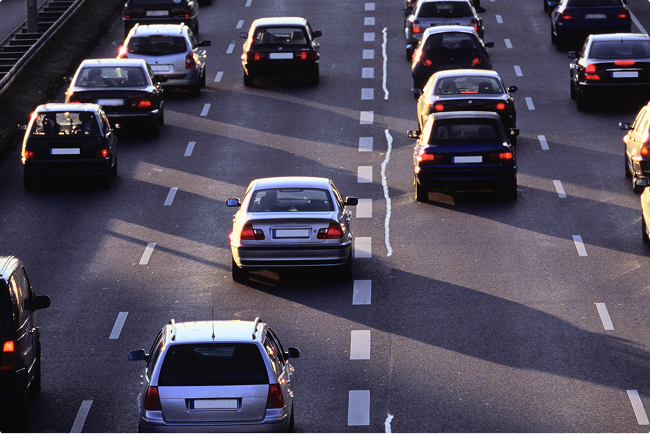

Lane splitting is legal in Minnesota as of July 1, 2025. This change in the law came after Governor Walz signed HF 5247 and allowed both lane splitting and lane filtering under specific circumstances. Motorcyclists may pass other vehicles in the same lane while in low-speed or stopped traffic, but the maneuver remains illegal in school zones and certain other locations.
Because these rules are new, it’s important for both riders and drivers to understand when lane splitting is and is not allowed. As trusted Minnesota motorcycle accident lawyers, Sieben Alexander, P.A., is here to provide the insight you need to navigate this legal landscape with confidence.
- Minnesota’s new law requires riders to stay within 25 mph and no more than 15 mph over surrounding traffic when lane splitting.
- Lane splitting and lane filtering became legal in Minnesota in July 2025, but riders must still stay within strict speed and location limits.
- Our attorneys can help you understand how Minnesota’s lane splitting law may impact your motorcycle accident claim.
New Minnesota Lane Splitting Laws: The Ultimate 2025-2026 Rider’s Guide
Minnesota’s lane splitting and filtering law took effect on July 1, 2025. The law was passed through HF 5247 and remains in effect in 2026. It updated Minn. Stat. § 169.974 by outlining when motorcyclists may legally pass within the same lane.
Under the statute, lane splitting is only allowed in low-speed traffic. A motorcyclist may pass within the same lane when traveling 25 mph or less and no more than 15 mph faster than surrounding traffic. Once traffic exceeds 25 mph, the rider must return to a single lane.
“While splitting and filtering are now legal, they are not mandatory, and they’re not always the best option. Motorcyclists should use their best judgment about if and when this can be done safely.”
— MMSC Administrator Jay Bock
What Are the Restrictions Under the New Lane Splitting Law?
The new law places clear limits on where lane splitting and filtering are allowed. Even when meeting the speed requirements, riders cannot perform these maneuvers in certain high-risk areas, including:
- A roundabout’s approach, drive-through, or exit
- School zones
- Work zones where traffic has been reduced to a single lane
- Freeway or expressway on-ramps where vehicles are queued
Lane Splitting vs. Lane Filtering: Key Differences and Legal Limits for 2026
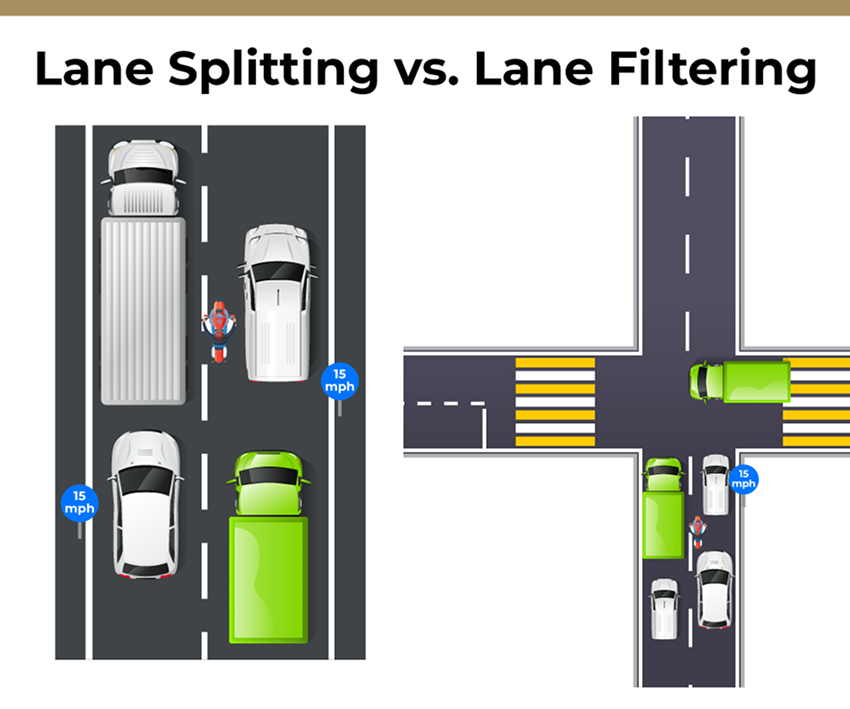
Minnesota law distinguishes between lane splitting and lane filtering, even though many drivers use the terms interchangeably. Each has its own definition and limits under state law:
- Lane splitting: This allows a motorcyclist to pass another vehicle in the same traffic lane in slow-moving traffic. Minnesota only permits it when moving at a maximum of 25 mph, and the motorcyclist cannot travel more than 15 mph faster than surrounding traffic.
- Lane filtering: This applies when traffic is completely stopped, such as at a red light or in a traffic jam. A motorcyclist may travel between other vehicles but cannot exceed 15 mph.
Both maneuvers are only legal in Minnesota when there are at least two lanes of traffic traveling in the same direction.
Is Lane Splitting Dangerous? What Minnesota Riders and Drivers Should Know
The safety of lane splitting is a long-debated topic, and reasonable arguments exist on both sides.
Critics suggest that lane splitting can increase the chance of collisions because drivers may not expect a motorcycle to pass within the same lane. A driver may suddenly change lanes while a motorcyclist is passing between vehicles, which leaves little time for either party to react.
Supporters may argue against this criticism by saying that many crashes involving lane splitting are caused by driver error, such as distracted driving or failure to check blind spots. They suggest that lane splitting can actually improve safety in certain situations. For example, allowing motorcycles to move out of stopped or slow-moving traffic may reduce the risk of rear-end crashes by removing them from vulnerable positions in traffic.
The Minnesota Department of Public Safety and the Minnesota Motorcycle Safety Center are urging patience and awareness from all road users. As drivers and motorcyclists get used to the new law, it’s possible that safety outcomes will improve over time.

Who Is At Fault in a Lane Splitting Accident? 2026 Liability and Insurance Rules
Minnesota follows a modified comparative negligence law in personal injury cases. This means multiple parties can be at fault for a single accident, and the insurance company may divide fault among all parties involved based on the facts of the crash. You may only recover compensation if you’re less than 51% at fault, and your award may be reduced according to your percentage of fault.
In lane splitting accidents, fault determinations often depend on whether the rider was following the rules set by the new law. If you exceeded the lane splitting speed limit in Minnesota, you may be assigned a greater share of fault than the driver who collided with you.
Other behaviors can also influence who’s at fault, such as whether you anticipated foreseeable lane changes or attempted to pass when there was insufficient space between two vehicles. If the driver was distracted, failed to check their blind spot, or intentionally tried to block you from legally lane splitting, they may be at fault for the crash. Several forms of evidence can help us determine liability, including police reports, helmet cam or dashcam footage, witness statements, and accident reconstruction analysis.
Potential Legal Consequences of Lane Splitting Accidents in Minnesota
While lane splitting is now legal in Minnesota, it can still lead to accidents that carry significant legal consequences for both riders and drivers. The new law changes how insurers and investigators evaluate fault by adding specific rules about when and how lane splitting is allowed. That can create liability in situations where fault would have been assessed differently before the law changed, making these cases more complex than a typical crash.
If you were injured in a collision involving lane splitting, it’s important to speak with our Eagan motorcycle accident lawyers before talking to the insurance company. The insurer may use anything you say against you, and your early statements can affect how much fault is assigned to you and what compensation you may recover.
Injured in a Lane Splitting Accident in Minnesota? Sieben Alexander Can Help
Motorcycle accidents involving lane splitting can lead to catastrophic injuries. These crashes can affect every aspect of a victim’s life, including their health, mobility, relationships, comfort, mental well-being, and finances. If someone else’s negligence caused you harm, you deserve accountability and fair compensation for these losses.
Our team provides trusted representation to individuals and families facing the aftermath of a serious motorcycle crash. As established Minnesota personal injury lawyers who stay on top of evolving legislation, we have a deep understanding of how the state’s new lane splitting law can influence motorcycle accident claims. When you turn to us for help, we’ll review the facts of your case, explain your options, and help you pursue the compensation you may be entitled to.
Our Minnesota Motorcycle Accident Attorneys Are Ready To Fight for You
At Sieben Alexander, P.A., we have spent more than 50 years helping injured Minnesotans pursue justice and compensation after serious accidents. Our attorneys have over 200 years of combined legal experience and are ready to use it to pursue the results you deserve. We work on a contingency fee basis, meaning it costs nothing out of pocket to hire our firm after a motorcycle crash.
Let us put our track record,resources, and client-first approach to work for you. Contact us online or call 651-437-3148 for a free, no-obligation consultation with a member of our team.
Minnesota Lane Splitting FAQ: 2026 Legal Speeds & Rules
Get answers to common questions about lane splitting in Minnesota.
Minnesota legalized lane splitting and lane filtering under certain conditions on July 1, 2025. The new law allows a motorcycle to pass another vehicle in the same traffic lane only when traveling at low speeds.
Lane splitting is only allowed in Minnesota when a motorcyclist is traveling at a maximum of 25 mph and at no more than 15 mph over the speed of surrounding traffic. A motorcyclist must stay at a maximum of 15 mph when lane filtering in Minnesota.
Lane splitting and lane filtering are prohibited in Minnesota when traveling at high speeds, in roundabouts, in school zones, on freeway on-ramps, and in single-lane work zones.
No, drivers cannot intentionally interfere with a motorcyclist who is lawfully lane splitting in Minnesota. Doing so may constitute negligence if it leads to a collision.
Yes, unlawful or reckless lane splitting could affect your motorcycle accident claim in certain cases. If you violated Minnesota’s motorcycle lane splitting rules, your compensation could be reduced under the state’s modified comparative negligence law.