

- Various types of evidence support asbestos exposure lawsuits involving a talc-based product, including medical records, proof of product use, occupational records, witness statements, and expert testimony.
- The strongest claims often have multiple forms of evidence supporting both the medical diagnosis and the related exposure to an asbestos-containing talcum powder product.
- Our experienced talc attorneys can help you identify, preserve, and present critical evidence to support your case to maximize compensation from all available sources.
What Evidence Can Be Used in a Talcum Powder Asbestos Lawsuit?
Evidence supporting a talc lawsuit can come from several different sources. The goal is to show that you were exposed to asbestos-contaminated talc products and that the exposure contributed to your illness. While your case may not require every single piece of evidence, having multiple forms of documentation can make it easier to prove your talc asbestos exposure claim.
Medical Records & Diagnosis
Medical evidence is the foundation of a talcum powder lawsuit. It establishes the diagnosis, documents your treatment history, and demonstrates the physical harm you’ve suffered due to an asbestos-related illness. Key medical records may include:
- Pathology and biopsy reports confirming a diagnosis of mesothelioma, ovarian cancer, or another disease with a known link to asbestos exposure
- Diagnostic imaging records, such as CT scans, MRIs, and X-rays
- Laboratory results
- Physician notes documenting symptoms and disease progression
- Records of surgeries, chemotherapy, radiation therapy, immunotherapy, or other treatments
- Death certificates, autopsy reports, or other records establishing the cause of death in wrongful death claims
Evidence of Talcum Powder Product Use
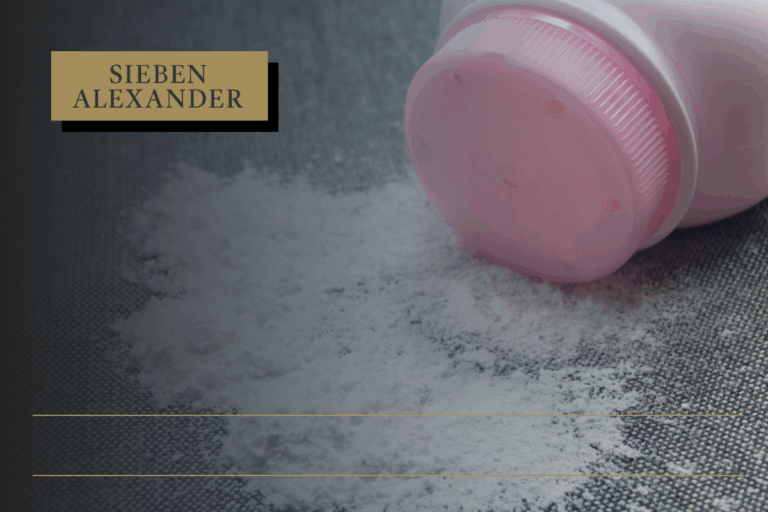
Proof that you used a talc-based product can be valuable evidence for your talcum powder lawsuit. Even products used decades ago may be relevant, as many modern claims involve exposure dating back to the 1960s. Any of the following could help you prove that you have a history of using talcum powder products that might have contained asbestos:
- Original containers or packaging for talc-based products, such as baby powder, body powder, or cosmetic powder
- Receipts or other purchase documentation
- Photographs or videos showing the product in use or stored in the home
- Product instruction manuals or warning labels
Evidence of Workplace Talc Asbestos Exposure
While consumer products are a common source of talc exposure, some individuals encountered asbestos-contaminated talc while working in environments where talc-containing materials were present. Relevant evidence of occupational exposure may include:
- Employment records, union records, or payroll documents establishing work history at high-risk facilities
- Job descriptions confirming that employees worked with talc-based products
- Internal records from job sites demonstrating the manufacturing, processing, or use of talc products in the facility
- Inspection records or regulatory findings documenting asbestos contamination at work
Witness Statements and Expert Testimony
Witness testimony and expert opinions can fill the gaps in the evidence. This can be particularly useful when the exposure happened decades ago or when the victim has passed away. These are just a few examples of the types of statements that can support a talc asbestos exposure claim:
- A personal statement describing your talcum powder use, including the frequency and duration of your exposure
- Testimony from family members or friends who observed the product use
- Statements from former co-workers confirming workplace exposure to talc-containing products
- Expert testimony from oncologists, pathologists, or industrial hygienists
Why Timely Filing Is Critical for Talcum Powder Asbestos Claims
Under Minnesota’s statute of limitations for talc asbestos exposure cases, you typically have four years from the date of diagnosis to file a product liability lawsuit. If an asbestos-related disease results in death, surviving family members have three years from the date of death to file a wrongful death lawsuit. Other states have different filing deadlines ranging from one to six years.
While this may sound like plenty of time, it’s best to take action well before the deadline approaches. Many people diagnosed with mesothelioma, ovarian cancer, or other asbestos-related illnesses were exposed to asbestos decades ago. Key evidence—such as product containers, purchase records, and witness recollections—may already have begun to degrade over time, and waiting any longer can make it even harder to access. When you reach out to our experienced attorneys, we’ll begin preserving evidence immediately in an effort to build the strongest case possible.
Over $900M Recovered: The Sieben Alexander Advantage in Talcum Powder Lawsuits
Our firm has represented Minnesotans harmed by asbestos exposure for more than 50 years. In that time, we’ve recovered more than $900 million in asbestos cases for our clients and built a depth of knowledge about asbestos-related illnesses, exposure pathways, and the evidence needed to prove talc lawsuits. When you choose our team to represent you, we’ll handle every aspect of the legal process, including:
- Gathering and analyzing medical records
- Identifying the talc products responsible for your asbestos exposure
- Locating and preserving product evidence, occupational records, and witness testimony
- Working with third-party medical experts to establish causation
- Calculating the full extent of your damages
- Filing claims against manufacturers or pursuing asbestos trust funds when available
- Negotiating settlements that reflect the severity of the harm you’ve suffered
- Taking your case to trial when necessary
Our experience includes serving as co-counsel in a case that resulted in a $65.5 million verdict against Johnson & Johnson—the largest asbestos verdict in Minnesota history. We also helped recover a $10.2 million mesothelioma verdict, which was the second-highest mesothelioma personal injury verdict ever obtained in the state.
Contact Our Minnesota Talc Asbestos Lawyers Today
You’re dealing with enough stress after an asbestos-related diagnosis. Let Sieben Alexander handle the case-building process on your behalf.
You do not need to have documentation ready before you contact our talc asbestos exposure lawyers. While you focus on your health, we’ll be busy investigating your exposure, gathering evidence for your talc lawsuit, and pursuing compensation for you and your family.
If you or a loved one has developed an asbestos-related illness and has a history of using talcum powder products, we’re ready to put our experience and track record to work for you. Contact us online or call 651-437-3148 for a free, confidential consultation. There are no upfront fees, and we only get paid if we secure a settlement or verdict for you.